Understanding MCP Servers: From AI Theory to Practical Application
The journey to understanding MCP (Massively Parallel Computation) servers begins not in a data center, but often within the theoretical frameworks of artificial intelligence and distributed computing. Early AI research, grappling with the immense computational demands of simulating intelligence, quickly recognized the limitations of sequential processing. This fostered an environment where concepts like parallel processing, distributed agents, and ultimately, architectures capable of handling vast, concurrent operations became crucial. Think of it as moving from a single brilliant mind to an entire network of brilliant minds collaborating instantaneously. This theoretical underpinning, exploring how complex problems can be broken down and solved simultaneously, laid the groundwork for the very design principles that govern modern MCP servers, making them indispensable for handling the data torrents and intricate algorithms of today's AI.
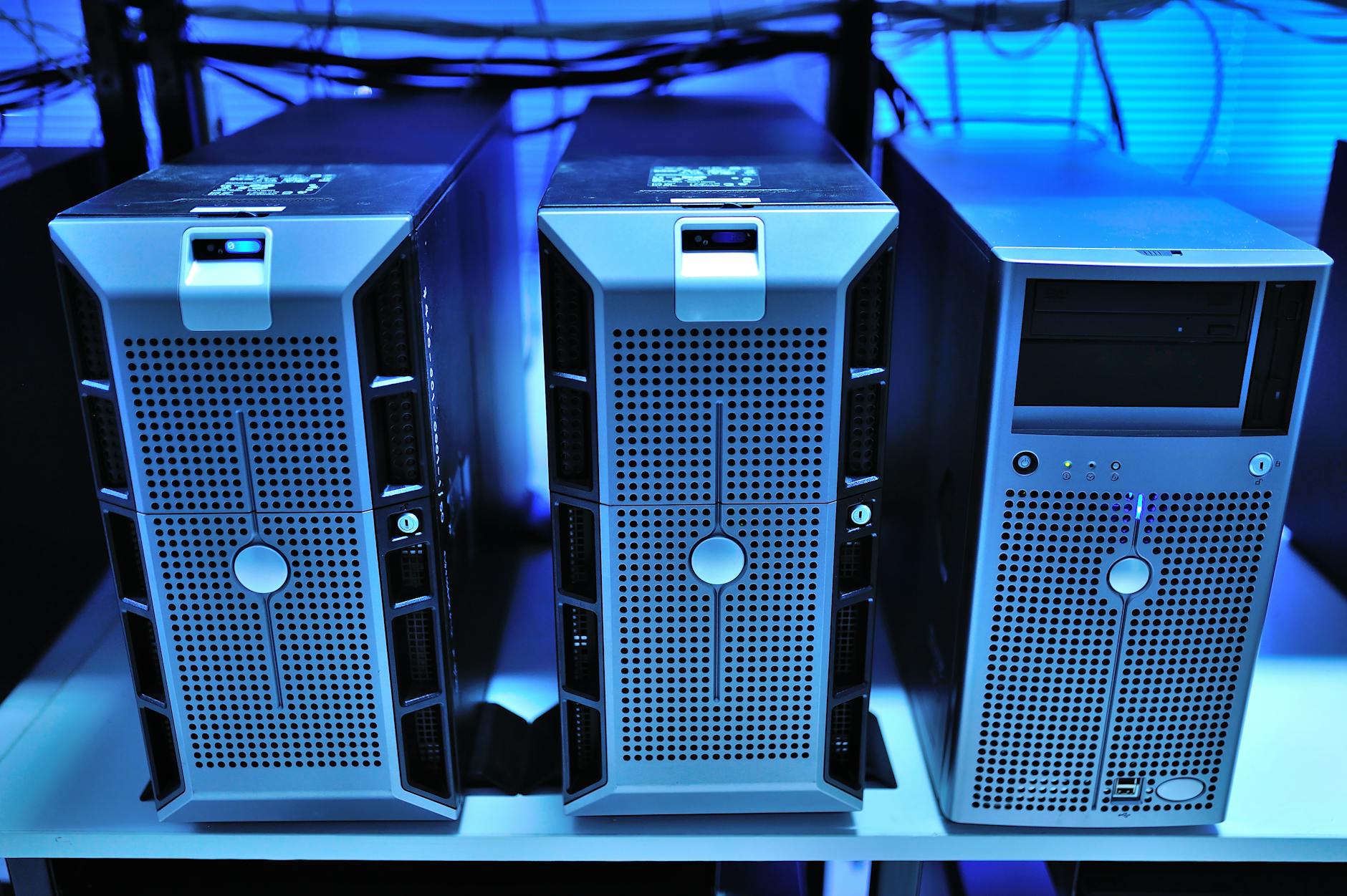
Transitioning from abstract theories, MCP servers represent the practical realization of these foundational AI concepts, evolving into powerful engines for a multitude of real-world applications. They are no longer confined to academic labs but are the backbone of industries ranging from financial modeling and scientific research to, most prominently, large-scale machine learning and deep learning workloads. Consider the training of a sophisticated neural network for image recognition; this task involves processing petabytes of data and executing trillions of calculations. An MCP server, with its architecture designed for parallel execution across numerous processors and memory banks, allows these complex operations to run concurrently, drastically reducing training times from months to days or even hours. This practical application of massively parallel computation is what truly unlocks the potential of AI, transforming theoretical breakthroughs into tangible, impactful solutions across various sectors.
A domain metrics api provides programmatic access to a wealth of data about a website's performance and authority. This can include metrics such as Moz Domain Authority, Majestic Trust Flow, estimated traffic, and keyword rankings. Integrating such an API allows developers to build tools for competitive analysis, SEO auditing, and website monitoring, empowering businesses to make data-driven decisions about their online strategy.
Optimizing Your AI Agent: Leveraging MCP Servers for Enhanced Intelligence
Optimizing an AI agent's intelligence hinges on more than just sophisticated algorithms; it critically relies on the underlying computational infrastructure. This is where Multi-Cloud Platform (MCP) servers play a transformative role. By distributing processing loads across diverse cloud environments, MCPs offer unparalleled advantages in terms of scalability, redundancy, and access to specialized hardware (e.g., GPUs for deep learning). Imagine an AI agent tasked with real-time data analysis from global sources; an MCP setup ensures that latency is minimized and computational resources are dynamically allocated based on demand, preventing bottlenecks and guaranteeing consistent performance. This robust foundation allows AI agents to process larger datasets, run more complex models, and ultimately, make more informed and intelligent decisions, pushing the boundaries of what's possible in AI applications.
Leveraging MCP servers for enhanced AI intelligence also brings significant benefits in terms of flexibility and cost-efficiency. Instead of being locked into a single vendor's ecosystem, an MCP strategy allows developers to pick and choose the best services and pricing models from various providers. For instance, a particular cloud might offer superior machine learning services, while another excels in data storage. A well-architected MCP solution integrates these strengths, creating a hybrid environment that is both powerful and adaptable. Furthermore, the inherent redundancy of MCPs means that if one server or cloud goes offline, the AI agent can seamlessly failover to another, ensuring continuous operation and uninterrupted learning. This resilient architecture is crucial for mission-critical AI applications where downtime is simply not an option, making MCPs an indispensable tool for future-proofing AI development.