**Unveiling the 'Why': How MCP Servers Directly Fuel AI Agent Breakthroughs (Beyond Just Faster Processing)**
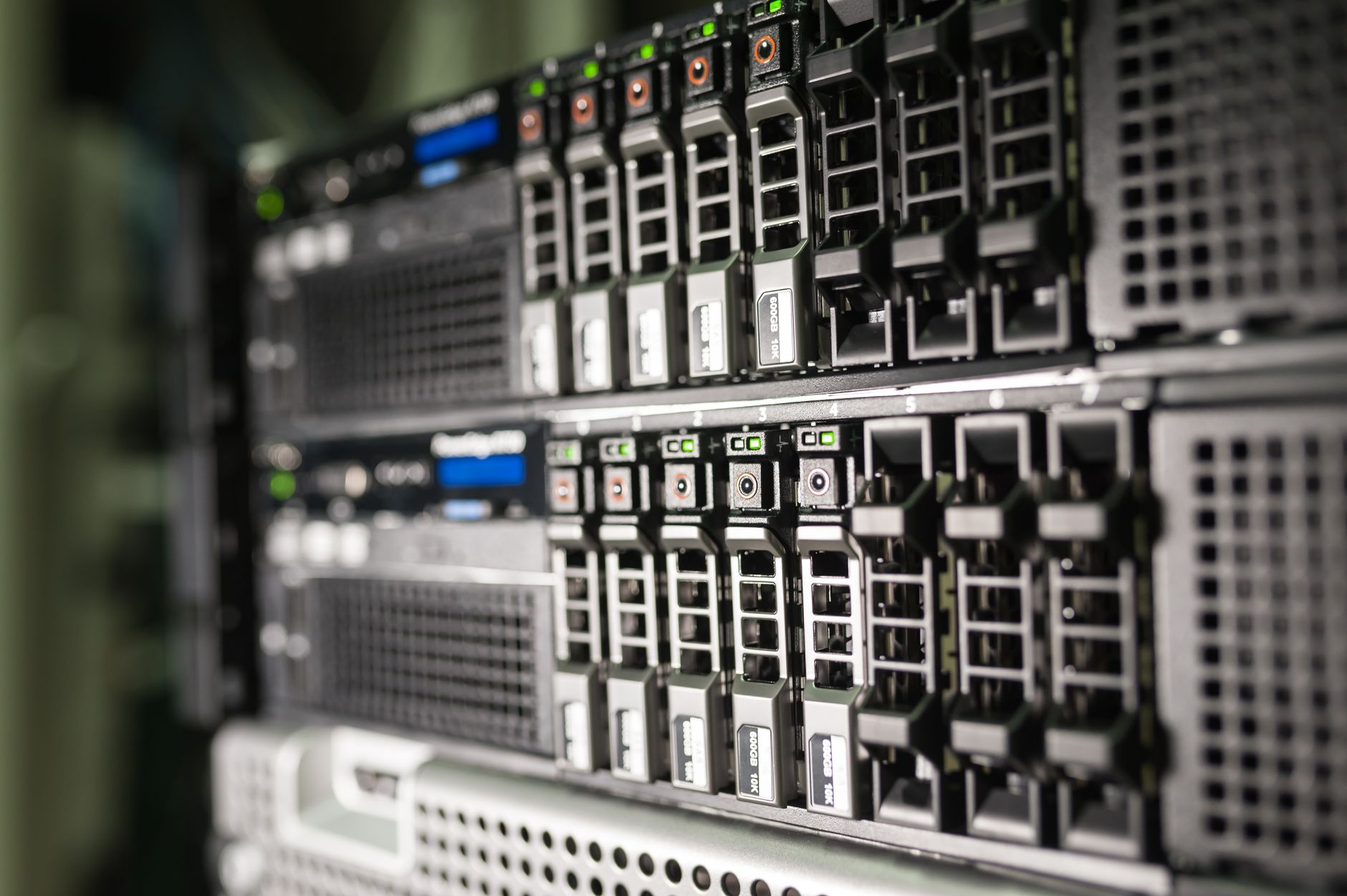
While the immediate thought might be that MCP (Massively Parallel Processing) servers simply offer faster number crunching for AI, their true impact on AI agent breakthroughs delves much deeper into the very fabric of how these agents learn and operate. Consider the complex, multi-modal data streams that modern AI agents must process – everything from natural language and images to real-time sensor data and historical user interactions. An MCP architecture, with its ability to distribute and simultaneously process vast, disparate datasets across numerous cores, allows for an unprecedented level of real-time contextual understanding. This isn't just about speed; it's about enabling agents to synthesize information from various sources concurrently, fostering a more holistic and nuanced comprehension of their environment. This simultaneous processing capability is critical for developing truly adaptive and intelligent AI agents that can react dynamically to complex, evolving scenarios.
Furthermore, MCP servers are instrumental in overcoming the computational bottlenecks that often hinder the iterative development and refinement of sophisticated AI models. Training cutting-edge AI agents often involves running countless simulations, testing various hyperparameters, and exploring diverse neural network architectures. Without the immense parallel processing power of MCP systems, these iterative cycles would be prohibitively time-consuming, significantly slowing down the pace of innovation. The ability to distribute these highly demanding tasks across a multitude of processors means researchers can:
- Experiment with larger datasets
- Test more complex models
- Accelerate the convergence of learning algorithms
Serp API pricing offers various plans to suit different needs, from hobbyists to large-scale enterprises. You can find detailed information on serp api pricing, including free trials and custom packages. Understanding the pricing structure is crucial for optimizing your data extraction budget and ensuring you get the most value from your API calls.
**From Concept to Code: Practical Strategies for Leveraging MCP Servers to Optimize Your AI Agents (Plus, We Answer Your Top 3 Questions)**
Optimizing AI agents isn't just about the algorithms; it's crucially about the underlying infrastructure. That's where Microsoft Connected Platform (MCP) servers truly shine. These robust platforms offer unparalleled scalability and integration capabilities, making them ideal for handling the demanding computational needs of sophisticated AI. By leveraging MCP, you can streamline the deployment and management of your AI models, ensuring they have the necessary resources to operate efficiently. Furthermore, MCP servers provide a secure and reliable environment, crucial for protecting sensitive AI data and ensuring continuous operation. This foundational strength allows developers to focus more on refining AI logic and less on infrastructure bottlenecks, ultimately accelerating the journey from a nascent AI concept to a fully operational, high-performing agent.
Transitioning from conceptual AI models to high-performing agents requires a strategic approach to server utilization. MCP servers facilitate this by offering a suite of tools and services designed for complex workloads. Consider these practical strategies:
- Containerization: Utilize Docker or Kubernetes on MCP to package your AI agents, ensuring consistent environments across development and production. This simplifies deployment and scaling.
- Data Integration: Leverage MCP's strong integration with Azure data services (e.g., Azure Data Lake, Cosmos DB) to provide your AI agents with real-time access to vast datasets, crucial for continuous learning and improvement.
- GPU Optimization: Configure MCP instances with powerful GPUs to accelerate model training and inference, drastically reducing processing times for compute-intensive AI tasks.
By implementing these strategies, you empower your AI agents with a resilient, scalable, and high-performance backbone, leading to more intelligent and effective outcomes.